


 After the following the 3 Steps to Find Art Gallery Representation, you should be ready to approach your ‘target gallery’ and sell yourself! There are a number of ways to approach an art gallery for representation. I have broken it down into 7 creative ways…
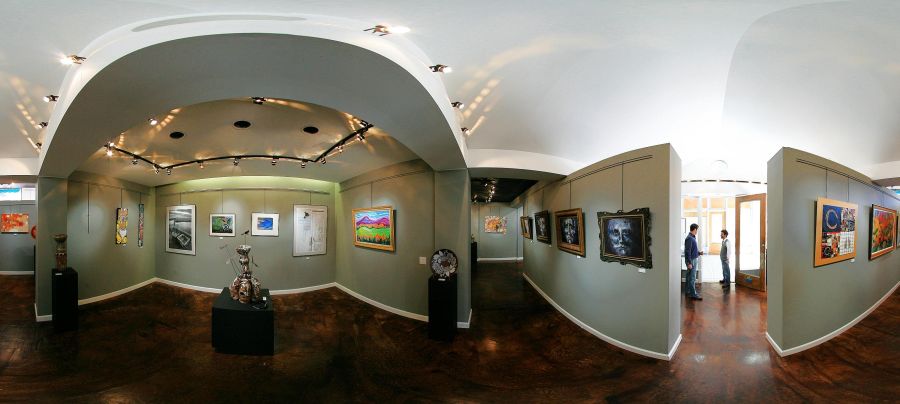
#1. Specific Gallery Requirements:
Check your ‘target gallery’ (this is the gallery you think is your best match) website and see if it has a specific protocol for artists’ submissions.
- If it does have guidelines, follow them (or be a rebel and do it your own way, but you might get shut down).
- Some galleries, especially within the high end fine art market have specific submission requirements and policies.
- Usually artists must submit work for review.
- This generally means a professional portfolio (more about this below).
- Remember, good galleries are inundated with artists’ inquiries and submissions each week.
If there are no guidelines then you can try some of the suggestions below:
#2. The Portfolio Submission:
If you chose to send a portfolio directly to your chosen gallery, be sure and follow the guidelines mentioned above.
- Still today, most artists simply send in a marketing package that includes a professional portfolio.
- The portfolio often times gets stacked up in a pile and overlooked. This is why it is a good idea to follow up two weeks later with a phone call.
- Don’t try and get too clever with the presentation.
- Keep your portfolio tailored, professional and filled with your best work.
- Generally expect to submit a professional portfolio of at least 10 slides, photos or transparencies or a CD depicting recent works.
- Always send a self-addressed, stamped envelope or risk never seeing your material again!
- Please read how to Create a Powerful Portfolio for up to date advice from Jason Horejs, gallery owner and author of the book, “Starving to Successful – The Artist’s Guide to Getting into Galleries and Selling More Art”.
#3. The Cold Call:
This is where you pick up the phone and call the chosen gallery and pitch yourself…
- Practice your pitch at home and rehearse it on a friend who will be honest with you!
- Have a notepad with your thoughts outlined so you don’t ramble.
- At this point, be ready to sell yourself because there is no artwork to hide behind over the telephone. Here are a few hints to help you make that call…
- Check the gallery hours and exhibition schedule.
- If there is an event scheduled, make your call at least a week before or a week after the after the event.
- You minimize the risk of interrupting a busy and stressed out director.
- It is best to make phone calls either in the morning or at the end of the day. This is when busy directors most generally are at their desks.
- Avoid calling on Mondays and Fridays…make calls during the middle of week.
- Ask to speak with the Director. If he/she is not available ask when he/she will be available and do not leave a message. (You might not get a return call) This way, you can call back later.
- Keep the conversation short, friendly and to the point.
- Introduce yourself, explain that you are interested in their gallery, and briefly tell them a little bit about you and your art and why you are a match for them.
- Follow up the conversation with an email linking to your website or attach a few jpeg images of your work – do this within a day so they don’t forget you.
- Mention in your email that if you don’t hear back from them, you will check back – give them one to two weeks.
- Or ask the gallery if they would prefer a portfolio, slides or a website to review.
#4. The Walk In:
Get ready to sell yourself! This is a more aggressive approach which may or may not work – it all depends on how attuned you feel with the director or owner. There are no set rules so be ready to go-with-the-flow. Here are some ideas to help you take that step in the door:
- Just like the ‘cold call’ check the gallery schedule and make sure you are not interrupting a major event or busy time.
- Hopefully you have done your homework and familiarized yourself with the gallery.
- Look your best.
- Ask to speak with the owner or director.
- Be informed and demonstrate that you understand the gallery program.
- Let them know why your work is a good match.
- Do not walk in with paintings tucked under your arm – this looks desperate.
- Leave a business card with your website information or a portfolio for their review.
- Don’t overwhelm them with too much information, leave them wanting more.
- Walk in with a good attitude.
- Be courteous.
Now let’s say they really like you and things have gone well…they might ask to have you send them a few paintings for their approval – or they might ask to see some work in person. At this point (this has worked for many of my artist friends, especially when they are on a road trip) have few small framed samples of your best work out in the car!
#5. The Look & See:
Invite your targeted gallery to visit a current showing of your work.
- Many artists show their art is art/craft shows, restaurants, banks, interior design firms, frames shops and their own studios.
- If you are lucky enough to live in a community that has a possible gallery for you this approach might work. I suggest you send a printed invitation with an image of your art to the director followed up with a phone call.
- This is the approach I chose back when I found my first gallery years ago! I had a sell-out show in a friend’s design studio. While it was still hanging, I invited the gallery director to view my art. She loved it and the rest is history!
#6. The Referral:
This is the best and most effective way of approaching a gallery. It has worked wonders for me in the past. If you network with other artists, you most likely have friends with good connections. And yes, just like in Hollywood – it’s who you know.
- Ask your artist friend to recommend you to their gallery.
- Make sure to have your friend send them to your website or give them a portfolio of your art. This will peak the gallery’s interest in you.
- Within a week it is up to you to follow through.
- Give them a call and remind the gallery that they were recommended to you by your mutual artist friend.
- From there, hopefully you can build a working relationship.
#7. The Gallery Solicitation:
“If the mountain can’t go to Mohammad, let the mountain come to Mohammad.” What do I mean by that familiar, old proverb? This is when the gallery approaches you!
- Yes, this does happen. It has happened to me!
- This is a supreme compliment, but before you say, ‘yes’, make sure to check the gallery’s references and business record.
- I usually call a few artists withing the gallery ‘stable’ and ask them if they are happy with their working relationship & if the gallery pays.
- If the gallery measures up and look like a good fit, this can be the best of all worlds. The gallery picked you – that means they are excited to show your work in their gallery, and this can lead to more sales!
- Beware of vanity galleries!
The above suggestions are advice that I have compiled from my years as an artist and talking with galleries and fellow artists. We all have battle scars and war stories to tell, but I hope these ideas help keep your pain to a minimum.
Just remember,
“If at first you don’t succeed, try, try again.”
“Don’t be discouraged. It’s often the last key in the bunch that opens the lock.”
Good luck. I hope this all helps. Let me know if any of these suggestions work for you! ~Lori 🙂
PS. These are not ‘rules’, just some helpful guidelines…
*****
If you like this article, I highly suggest reading:
3 Steps to Find Art Gallery Representation
How to ‘Jump-Start’ Your Art Career
Finding Your Own Artistic Voice
10 Ways to Develop Your Brand and Market Your Art
How to Prepare for Gallery Night: Tips & Advice
Newsletter Art Marketing Tips That Work!
10 tips to Bring Visitors to Your Open Studio or Art Fair Booth
How to Find an Art Print Publisher: One Artist’s Way


This provides a wide range of useful information. Keep on posting.
When it comes to arts, I’m so interested to it. Thank you for sharing this. Art Gallery is so interesting for me. I also appreciate the artists around the world. Art is simply amazing. Keep on posting.
I am happy you found this site and you are enjoying the art articles. Thank you for the comments. Take Care, Lori 🙂
Thanks for this great, sums-it-all-up article. I am just at this stage of gallery searching so this was perfect timing.
One thing I’ve found very helpful, if it’s in your budget — I have my photography portfolio on my iPad. Unobtrusive in my bag, and when it seems appropriate, a sample of my work in always within my reach.
Lori, Thank you for this post – I have had good success sending a “prospecting package” to introduce myself and my work to galleries. The package consists of a cover letter, a rack card (9 x 4 in. post card) and a business card. My success rate so far has been about 6% (one gallery agreement for every 15 letters sent.)
Here’s a complete description (with images) of what I include in the envelope, and why, in my opinion, this method is a better first step than a portfolio: http://www.brennenmcelhaney.com/journal/?p=107
Your prospecting package is really professional, Brennen. Thanks for sharing the link. You should be proud of your success rate – especially during this strange market. Yes, the playing field is changing and most galleries want a quick overview. However, some still want a portfolio. That is why it is best to check the specific gallery submission policies. Portfolios are especially good for walk-ins.
Thanks for sharing your tip!
Lori
Lori, thanks for sharing this great advice, I especially like the idea of inviting gallery directors to your own smaller scale shows, brilliantly simple!
Hello Marc-
It’s good to see you here again. I am glad you liked that gallery tip! It worked for me.
Lori 🙂
Namaste
Thank you so much for sharing this.
Much love and light
Prerna
You are so very welcome. Good luck finding a gallery. 🙂
Hello
I ran a small artist collective we lasted for a few years. Great contribution to the community. Thanks for the time on taking to write such a detailed guide.
Hello Jason, I started out in an artist’s coop. They can be a great way to showcase locals and enhance art within a community. Glad you like this post
Hi Lori,
Thanks for sharing those tips and very lovely paintings.
May I get some suggestion for my website? I did not have any formal training in painting and work as an architect, how should I let the gallery know that I am serious about painting while working as an architect?
http://www.chihyingwong.com
Thank you very much,
Wong
Hello and thanks for visiting here! First of all, your work is impressive!
I had fun looking at your site. It is very hip and entertaining.
My first thought was that your site is a bit too busy and I had difficulty finding images of your art. You are doing a good job at branding yourself as the artist, but a gallery will want to see great photos of the art. The way it is set up now, it’s time consuming to navigate. I would suggest have a section totally dedicated to a gallery of your paintings.
This blog is getting too busy for some visitors. I might have to simplify it too. My own art website is much simpler. http://www.lorimcnee.com/
Congratulations on all your efforts and talent! I’m honored to have you visit here and ask for advice. You have a bright future. ~Lori
https://www.finearttips.com/blog/how-to-start-an-art-blog-or-website-in-minutes/
[. ] prezzo anello cartier Robe rougeaud en grège et voile, Cartier. Menotte et chevalières Bois relative love di cartier s au Rose sous or rosé, or lilial, or jaunet et diamants, Cartier Joaillerie. [. ]. Esp茅rons que cette cartier love anello campagne relatives au financement se retrouve assez lucrative et que la majorité des demandes deviennent assez gra
Dear Lori, it was good tomread your article on finding a gallery, and to know that there is somewhere still in this world that wants more artists! Here in London, galleries long ago stopped looking at new artists and even coops seemto be closed shops to outsiders, all one can do is keep working away, keep applying to the competitions and never give up… maybe I should move to Idaho or whereever?
Dear Mick, I have heard that news from others like yourself. I am sad to hear that London galleries are so difficult. I have some friends who are successful outside of London. Maybe I can find out some answers through them. Thank you and good luck! You’d love Idaho 😉
Hi dear Lori
I read and really all these information help me, thank you for your time and this wonderful information.
Naseer – Turkmani
Kabul Afghanistan
Hello Naseer, I am happy you enjoyed this!