


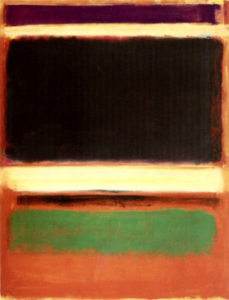
 In the popular post,Painting Abstracts: The Process Behind the Art, a talented young abstract artist gives us a rare glimpse into the thought process and inspiration behind his abstract paintings.
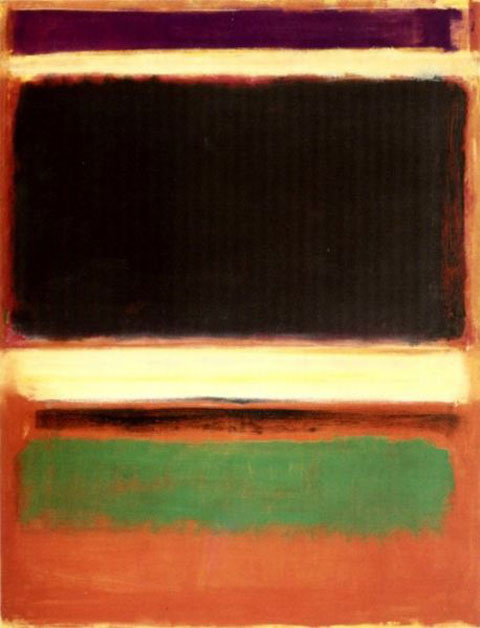
Abstract art, otherwise known as Modern Art mystifies many people, including representational artists. The untrained eye might have trouble understanding and appreciating it as a serious art form. We have all heard people say (or thought ourselves) things like:
- “That looks easy to paint”
- “I could do that!”
- “Who would anyone pay for drips of paint on a canvas?”
This post explains why I, a representational artist, appreciates Abstract Art…
Because, pure Abstract Art represents what is being felt on the inside rather than what is being seen on the outside. Abstract Art is more than a haphazard mess flung onto canvas. The creativity within these works of art is meant to turn heads and illicit new imaginations within the viewer. In most circumstances, Abstract Art is filled with exciting colors and textures. These elements are what makes it one of the most favored forms of art collected today. A strong piece of art is able to grab your attention and pull an emotional response from within you. This is the artist’s plan to keep your mind thinking, and analyzing and your eyes moving through the painting.
- “How and why do these colors interact with each other this way?”
- “What is the symbolic meaning?”
- “What does this shape represent?”
Questions like these are left to the viewer to answer and decide. Abstract Art breaks away from the traditional representation of everyday objects and familiar subject. The viewer is not distracted by meaningful images, so the mind is stirred into feeling the energy and spirit of the painting. Abstract Art does not reflect any form of realism in fact, it breaks the rules. The only requirements for such paintings are shapes, colors, lines, patterns, and an unbounded imagination to view the finished work! As artists we all have the need to reach inside ourselves and rouse our unconscious feelings. Whether to tell a story, to capture an image, or to illustrate an idea it is a universal desire for both representational and abstract artists.
Here’s to unleashing our imaginations, Lori Please check out the very interesting companion article: Painting Abstracts – The Process Behind the Art I found these article helpful: Abstract Art – An Introduction and How to Paint Abstract Art

Thank you so much for shedding light into Abstract Art… It is a big part of my life and I cherish it, thanks so much for the encouragement! Julia
http://www.singingelegance.com
Hi Julia- Thanks for taking time to read and comment on the Abstract Art article. I have gained a larger appreciation for this art form and enjoyed writing it and sharing my thoughts with others.
Take care – Lori
Thank for sharing good and useful information. This information is very valuable.
regards.
http://www.collect-art.com/Henderson-Cisz_work
Hello Art, thanks for visiting and sharing your comment on this article. I appreciate the feedback.
Lori
As an artist that went from more representational/illustrative to more abstract, I really can relate to this post. I think it’s easy to fall into the mindset of “oh, anyone can paint that” and some abstract art does come off as too simplistic. But I think once you get past the stereotypes about abstract painting and use the technique in your work – you see the beauty and emotion in it (even if your logical side is screaming about it looking like something a five year old could do).
Thank you for your comment. It would be interesting to hear about why you switched from Representational Art in favor of Abstract Art. If you would like to share your story and thoughts with FineArtTips.com, it would be appreciated and would be encouraging to many readers. https://www.finearttips.com/contact-me/submit-your-guest-article
All that aside, thanks for taking time to comment and share your thoughts-
Lori
I’m glad you wrote this, Lori. I’ve been thinking this very issue and considering writing a post on why I find abstract art harder to make. In keeping with what you’re saying here, folks tend to assume that it’s easy to paint something abstract, whereas representational work must be very difficult. But as a fairly representational artist myself, I’ve been trying to loosen up my technique some and do more abstract compositions — at least in the sketch book. And dang it, it’s much easier to compose actual things or people and just focus on how you want to represent that — what you want to say or show about that.
Hey Patrick, thanks for the insightful comment. I totally agree with you. In fact, I find it difficult at times to ‘loosen up’ technique within realism let alone trying to jump into abstract painting. Let us know if you have any luck with it. It would be interesting to hear how you are progressing.
Good luck-
Lori
Hi Lori,
Great article! I love painting abstract as it lets me get more in touch with my intuitive side and as you said above – my feeling side. I’m a very intuitive person and painting abstract for me is about intuiting where the next brush stroke should be. I realize that there are different forms of abstract art and some are more about precision and geometrical shapes. Although I’m drawn to that style quite a bit, I still find myself needing to be less restricted when I paint.
I love the surprises that come out of painting intuitively. Many times I’ve been leaning toward one aspect of the painting only to look at it later to see something completely different emerge! I love the freedom in painting abstract art. That is very important to me – the freedom aspect.
It is NOT however, about just standing back with your eyes closed and slapping paint randomly. At least my way isn’t. 🙂 It was more of a challenge for me to let go and paint totally abstract than I thought it would be. Now a part of me craves the freedom and release it affords.
Thanks again for a great article!
Great comment! Thanks Itaya.
Although I haven’t tried to paint Abstract Art, I can imagine how challenging it would be – thus why I haven’t tried it! It must be liberating once the artist feels comfortable with the concept. I hope to try it someday because I do have an idea in my head…now I just need the time to experiment.
Thanks for sharing your thoughts. Many of you who have commented on this article share a similar view, interesting.
Lori 🙂
Great comment! Thanks Itaya.
Although I haven’t tried to paint Abstract Art, I can imagine how challenging it would be – thus why I haven’t tried it! It must be liberating once the artist feels comfortable with the concept. I hope to try it someday because I do have an idea in my head…now I just need the time to experiment.
Thanks for sharing your thoughts. Many of you who have commented on this article share a similar view, interesting.
Lori 🙂
I enjoyed this article. This is exactly what my paintings are about, abandoning the realistic representation of dancers so that viewers are not distracted by what they think they know. I think it is also important to remind people that abstractions are simplifications or exaggerations of something, random brush strokes and drips fall under a completly different category of art called non-objective art.
Great, I never knew this, thanks.
What you say here is a nice, very brief introduction to abstract art. I have been experimenting with abstract art for a few years and what you say barely scratches the surface. There is a tremedous depth and subtlety to abstract art and every time I attempt to write something brief about it, I find myself writing a longer and longer article because I explore the depths of abstract art as I write. It is unfortunate that so many of the public do not grasp the wonderful intricacies of abstract art, because they have been raised on very traditional art in very traditional schools in very traditional educational systems. With abstract art the paint and materials are almost extensions of the artist’s psychology, spirit, and emotions. But that does not mean that abstract art can be done easily by simply throwing paint onto a canvas at random. For abstract art to be beautiful and to make and intellectual or emotional connection with the viewer, requires the artist to compose his/her work very carefully in terms of color strategy, the shapes to use, how to apply them, just as it would for a work of representational art. Personally, I may spend days thinking up a basic composition before even putting any paint to canvas and as I work, I may take hours planning which color to use next and where and how to apply it. But I digress. Abstract art is a fascinating challenge requiring the artist to think in completely different terms than an artist of the traditional schools. It is a hard row to hoe, but one that has many rewards. I love the challenge it presents and I relish the mental and emotional demands it places upon me when I am creating a work. It really expands one’s consciousness of reality and of one’s own inner artist.
Hi Phil…yes, it is very difficult to condense a broad subject like ‘abstract art’ into a short but blog post. This article was my attempt at enlightening the traditionalist about this important artistic expression. Abstract art is a mystery to many and I hope this article helped in some small way. I personally have learned a lot and gained even more respect for abstract art from my research for this article. I often collect abstract art because I find it beautiful, thought provoking and something that I will not attempt to do myself!
Thanks so much for adding your insightful comments to this post. You will help others by sharing your views and thoughts.
Best – Lori
This great summary helped me very much! Bookmarked the blog, very interesting categories everywhere that I see here! I really like the info, thank you.
Thank you for giving us wonderful information. For some reason, people are not buying my prints. I am known and lots of people seem to like my stuff. I guess is the economy. I have done several consultant projects, but I am having trouble selling my digital art work.
You are welcome, Andres. It is tough for me to help you try and figure out why your prints are not selling without knowing your prints, and your market, etc. Yes, the economy is most likely the culprit. I think it is smart to diversify your work efforts and consulting is a great way!
Thanks for the comment.
Best-
Lori
Hi!!!My name is Amalia i`ve painted until 1 year ago but i kinda refused painting because i`ve found drawing with pencils and pens reprezents me more.I`ve made something recently in pensils but i hava no idea is an abstract art or i have any talent in what i`m doing because i`ve kinda loosed confidence so if i don`t ask much can i please send a picture with what i did recently..i really want someone telling me if i can continue or not and since you are a nice lady i thought i should ask..thanks a lot
Hi Amalia, what a pretty name! Thanks for stopping by. You are welcome to post a picture of your art on my Facebook Fan Page http://www.facebook.com/FineArtTips…I can see your art and help you there. Thanks so much.
Happy drawing,
Lori 🙂
I guess I could be called a representational artist, too. However, I’m probably a bigger color junkie than anything. Abstract Art catches my color attention every time.
One day I will give it a try, if anything it’ll be a new way to paint.
Great article explaining what it’s intentions are, Lori!
Hello Naturegirl – love your handle! I really enjoyed writing this post, it got me thinking a lot about the nuances of abstract art. Glad you enjoyed it too.
Lori
And abstract can be more personal for the very reasons you stated above, I think. Beauty, really, is in the eye of the beholder with abstracts. Very few abstracts interest me, but when there is one I like, I normally absolutely love the colour!
First of all ,why do we have in 2014 still explain abstract art, abstract is naturally nature, if we would not be there, something would be wrong with us, we would be still stuck in the 15th century.
Art has to evolve – art has to be new – art has to go with the time
Ursula
.
Hello Ursula, I work with so many artists and the public who still do not understand abstract art. Some people just don’t think that way, and different tastes make the world go around. Art will to continue to evolve because it is an infinite expression of Source. Thanks for your valuable thoughts.
Hey lori loved the article but dont you think that there is more then just that behind abstract art i mean these are just the basics
Please feel free to add you thoughts to this list….leave another comment if you’d like 🙂
I think there are a number of things that give context to the debate about abstract art that haven’t been mentioned yet:
First, over the past almost 200 years, there has been a proliferation of photographic technology. The days are long gone for the need of an artist to use technical skill to draw, paint, sculpt, etc, a snapshot of objects or events in front of him or her. Since the invention and popularity of cameras, the creation of art to gather likeness using singular, manual motions has become a choice or preference as opposed to a requirement to create a record.
Moreover, the value (not necessarily monetary, but to the public’s taste) in which realistic art has been measured since then is not in how accurately the subject is portrayed as much as the style (which is a nice way of saying “imperfections” from the most purely objective standpoint of realism) that is used. So, it could be said that people in recent times consider value in realistic art not in the actual realism, but rather in some sort of controlled abstraction. It’s just that these people have a certain tolerance for how much and what types of abstraction they prefer.
A lot of why not only abstract art, but manual-motion art in general, is so hard to grasp by most people these days is because it doesn’t serve a lot of the needs that art did not all that long ago. We don’t need people to paint and draw current events, important people, moments of historical significance, and other things, because photographs, video, etc, do a way better job of that. Art has turned toward a significantly more aesthetic, non-utilitarian purpose (which seems like an ironic statement in and of itself, because painting, drawing, etc, are supposed to be fine arts, which aren’t supposed to be utilitarian in nature anyway, yet, at one point, they had more banal societal utility).
One could say the avant garde movement showed a high level of awareness of the rapidly growing importance of aesthetics within art and sent up the first major red flag that times were quickly changing. Then, a few decades later, you had things like the rise of Warhol to shake things up to further throw aestheticism in our faces through what could be interpreted as sarcasm toward the death of a large part of art’s mundane utility toward society. (We don’t need to paint soup can labels, but why not paint them to send a message about our lack of need to do so?)
As it stands, abstraction seems to be about artists as opposed to art. Artists already have figured out that people don’t need art in the same way that they needed it 200 or more years ago, and the art that manual-single stroke artists make now, regardless of what style of type of art they create, shows that understanding. That said, when commissions come in, the general public, by and large, still wants things that are realistic, even if their vision of realism is a little different from what it was for the average person centuries ago. There seems to be a wider disconnect between artists and non-artists because of how recently (in comparison to the whole of civilization) the role of art has changed, and it’s going to take more time, probably another 100 or 200 years, before we’re all on the same page again.
It will still be a while before we can really get a good idea of how to place a value on artistic vision, because of just how intangible it is. As you well know, there are so many different ways to price art, and they are all quite arbitrary. And there is no clear line that separates who can’t sell anything versus those who do just OK enough to survive versus those who do very well versus those who are studio art rock stars. Everyone has a notion about it, but nobody really knows. If someone really knew, then art would be just like engineering, accounting, or some other more stable field and lack the immense artist earnings variance that it does. People would the road map to do X, Y, and Z to succeed and make generally accepted market earnings, and art products would be priced more like stuff you buy at the supermarket with much more tangible ideas about what creates supply and demand.
So, to make a long story short, the reason why abstract art is so difficult for people to grasp is because it’s rooted within a paradigm that the general public just hasn’t caught up with yet. As much as some artists may not want to admit it, painting, drawing, and such has derived its societal value from having a concrete, tangible, easily seen purpose to the common person. Although the average person does have a need and create a demand for aesthetic fulfillment, it’s not something people have any clue about how to evaluate. As such, artists are generally ahead of the general public and are creating things that fulfill the aesthetic desires of artists themselves. Eventually, the public and artists will come together again and find some form of common ground in which artists do create things that most people consider to be a public good, but we’re just not there yet. There is progress, because the public does understand the need for abstraction at some level, but it’s a matter of finding what works and what doesn’t. And furthermore, it’s a matter of finding out how art continues to play a part in the lives of people, hence creating value, monetarily and not.
Everything in this article is spot on. When I first started painting, I couldn’t understand abstract art, but yet it kept calling me like a siren on a rocky shore. Now that’s all I’m painting, I’ve become fascinated with the depth of meaning and emotion that can be reached through the pure aesthetics of Color, Line, Shape, Texture, and Form.
How repetition and variety together can create almost musical compositions across a canvas, and keep a viewer engaged for some time. Abstract art reaches into our souls both the artists and the patrons. It touches us just as much if not more so than any other genre. Thank you for a wonderful article.
Hello Andy, and thanks for adding your thoughts to this thread. As a representational artist I am finding that as I progress in my painting career, I am looking to simplify in an abstract manner. I am striving to capture the essence, rather than every detail. I find this quite liberating and challenging! 🙂