


Online Copyright infringement is a big topic of concern for visual artists. The fact is, anytime you put your art online, it is at risk of a copyright artist or other theft.
Even though my copyright has been infringed upon many times, I still believe the benefits outweigh the risks. There are ways to minimize the exposure. Here is my interesting story of how I stopped a copycat artist on Facebook. Be sure and read the comments – they are as informative as the post!
How I Stopped a Copycat Artist on Facebook (Or so I thought!)
On Facebook I was reading some flattering comments that were made about one of my paintings by a Facebook ‘friend’ who called himself, “Beni Mellal” from Mexico. Out of curiosity, I decided to check out Beni’s paintings…much to my surprise, shock and horror, I realized Beni was a copycat artist and stealing my art!
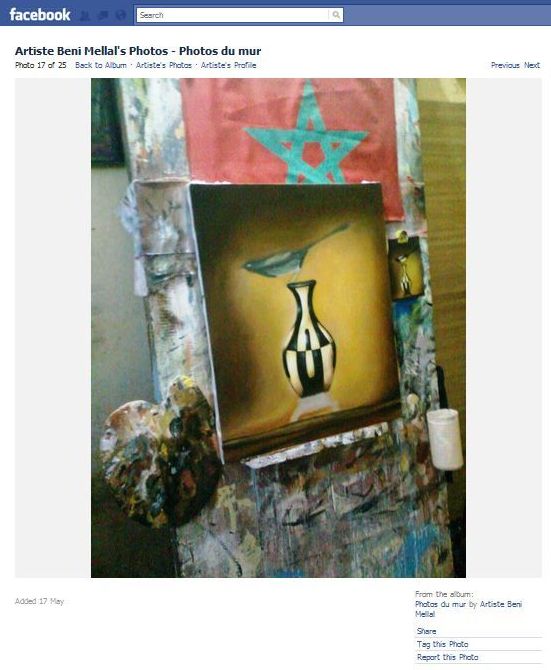
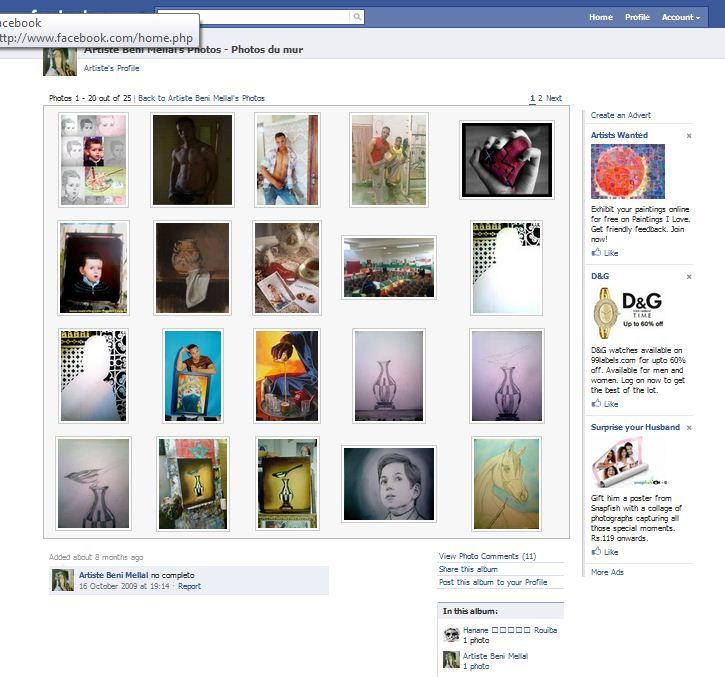
Beni’s painting album proudly displayed exact copies of my original oil paintings complete with his signature in the lower left-hand corner. AND to make matters worse, there were glowing comments on Beni’s page complimenting him on his great art! He was a copycat artist of MY original artwork!
Below is my original painting, and above is the finished copycat version by, “Beni Mellal”…
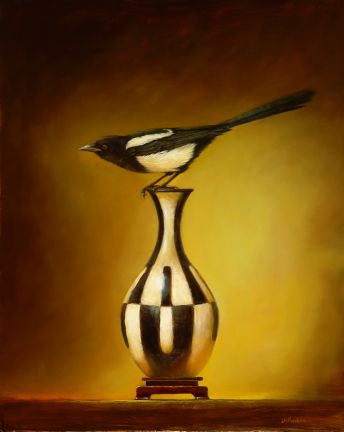
and here’s another…
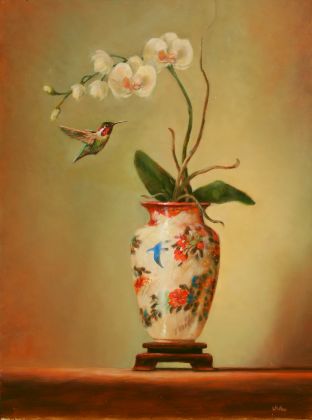
…and another copy by Beni.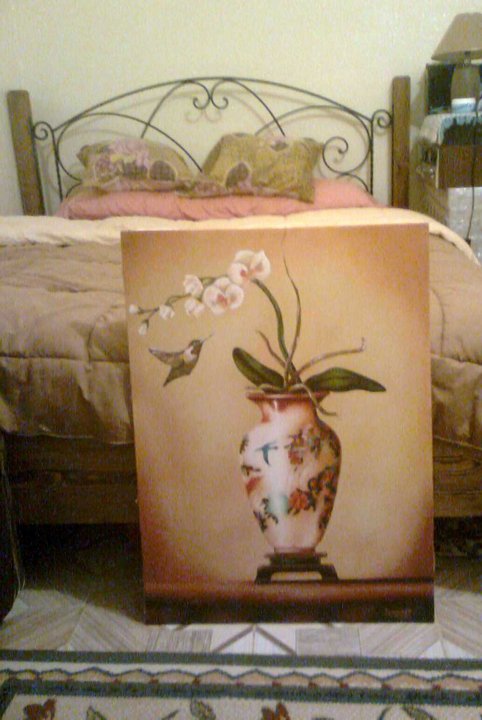
Once the initial ‘shock and awe’ wore off, here’s what I did to stop the copycat:
I am not a lawyer, nor am I well versed in art law so I contacted a few well respected fine artists and a couple of popular art bloggers, for some extra advice.
My Facebook artist friend, Marc Hanson, was the first to respond, “You know he’s doing those for sale. That set up is caked with paint. I bet he turns these out frames ’em up and they go out for sale immediately. He’s a worker, a factory from the way it looks…I’d go public and post this stuff on Facebook and your blog too. Then you should write an article about it, ask other artists who may have had this happen also to contribute, and take a bite out of these folks.”
How I stopped the ‘copycat artist’:
- I downloaded the incriminating images from Beni’s Facebook photo album.
- As Marc suggested, I went ‘public’ on Facebook with a link titled, “Beware of Copycat Artist!” This title along with the images really grabbed the attention of the art community and sparked a lot of interesting comments! (Be sure to click on the highlighted link to see the many helpful responses.)
-
Here are a few interesting comments:
-
James Baldwin: Just thinking about this for a moment…..Isn’t Beni Mellal a city in Morocco??? So is this guy working under a pseudonym? This could be awkward re the copyright infringement.
-
Steve Farrow: Your right James. He is from Morocco. He signs his work by the name of Boukhani.
-
Ted W Bishop: There is some html code that can be put into a page to prevent right click copying, does not solve the problem all together, though it helps.
-
Chantal Desharnais Visual Artist: A watermark is useless as it can easily be removed in photoshop…
-
- I reported the copycat artist to the Facebook ‘Help Center’ and filled out this copyright form. ***Now it’s easier than ever to copyright your creation here online!
After which, Clint Watson from Fine Art Views contacted me. I told him about the above events and mentioned,”This is one reason why there are still artists who do not want a website or a Facebook page for fear of this exact thing happening to them...” This statement inspired an interesting article by Clint entitled, “Don’t Fear the Copycat”.
Then Clint suggested that I give art law expert, Bill Frazer a call…and I did. This is what I learned about ‘copyright law’ from Bill:
- Once an original piece of art is completed, it IS protected under current ‘copyright treaty law’.
- The artist should sign the art with Name, copyright symbol © and the date of completion for added protection.
- Bill’s example: ©2010 Lori McNee
- It is advisable to add your copyright information on or below any published image of your art for added protection.
- Upload only smaller, low resolution images (72 dpi) on the internet.
- Your copyright information should also appear on each page of your website and/or blog.
- The artist DOES NOT need to formally register a painting to be protected.
- However, the artist will not be able to seek legal action without the formal registration.
- The artist can add a ‘watermark’ directly to your image for added protection.
- Bill personally finds watermarks annoying and not effective.
- I could file an ‘infringement lawsuit’, however this would be expensive and could take years!
- The US Customs Office helps to stop plagiarizers who have operations out of the country ie. China, N. Korea, S. America, Africa, Thailand, Mexico and even Switzerland!
- Artworks can be registered AFTER your copyrights have been infringed upon.
For more information Bill suggests to contact the US Copyright Office or email Bill Frazer at artlaw@mtintouch.net
BTW, the next day ‘Beni Mellal’ vanished from Facebook. I would like to thank all my Facebook artists and friends who helped to ‘stop the copycat artist’ and shut him down – at least for now…
“Taking something from one man and making it worse is plagiarism.” ~George A. Moore. Or maybe I should coin a new phrase, “Plagiarism is the sincerest of flattery.“Has this happened to you? Share your story with us… Thanks, Lori
PS. Be sure and read the many helpful, impressive & professional comments on this article for more information on copyright…
Let’s connect on Twitter and Facebook and you can see more of my art here > Lori McNee Fine Artist.

WOW, Lori, I am sorry this happened to you. Thanks much for this post! I do mostly print graphic design, but I sincerely hope nothing I’ve done has been stolen! How do you research something like this on FB, etc. to make sure it’s not happening to you? Thanks again! Great info!
Hi Lisa, thanks for the feedback on this important article. That is a good question and not one that is easily answered. Sometimes I Google myself and see what others are saying or doing with my work. But, the copiest it is more difficult to track down. If you really are curious, you can keep track of the views of your website to learn who is downloading images, ect…
There is not an easy cure for this. I hope this helps though.
Best- Lori
I know this is a couple years old, but in case you aren’t aware, you are now able to do image searches with google. Not the usual image search, but very specific image searches, this is a really tool useful for anyone that has copyright protected images on their websites. People steal everything from images to entire articles, I had my entire beauty website copied a couple years ago Its really frustrating and the only real recourse we had was to have the copy cat site bombarded with people letting them know that they were not the original author or makeup artist for the works they were taking credit for. They were using my portfolio to get jobs. Finally they shut down after I threated a law suit, I wasn’t going to but they didnt know that lol.
Anyway check out the Google image search, it might be helpful in keeping the theives away from your works, also you can put the copyright disclaimer on you FB and website, lie and say your images are coded and can be tracked lol, most would not know thats not possible, it’s a great deterrent.
Here is the link to Google Images info
http://support.google.com/images/answer/1325808?hl=en&p=searchbyimagepage&
All the Best
AJ, thanks for your comment from months ago. Thanks for your patience. Your comment about Google search is very helpful and I appreciate you taking time to share…would you like to write a guest post about this? Thank you. Lori
Hi Lori,
Good article and tips. It sounds like you’ve handled this unfortunate situation very well.
As an artist and graphic designer, I have had problems with copyright infringement too. It’s not just Facebook — it can happen anywhere.
I discovered one copycat artist by opening up TIME Magazine… much to my shock a design I’d done was in the magazine, but with a company name that I had nothing to do with! I contacted a lawyer, who said it was going to be thousands of dollars to sue.
So, I did more investigation into who the company was, and what agency they used to create the design. Once I had my homework done I contacted the CEO of the company, and also cc’d the ad agency, sending them both printed copies of my original design, and the details on where it had been published.
We settled out of court. No lawyer was required on my side.
Since then, I’ve discovered other copyright and trademark infringements by using Google Alerts, and monitoring logs. Usually, when I contact someone about a copyright or TM problem, they respond promptly and take the image down. In some cases, I’ve also insisted on having a statement posted on their site. It’s a nuisance to have to chase people down — but it’s essential to protect your intellectual property.
Cheers,
Franke
Franke, thanks for sharing your interesting story. This is not the first time this has happened to me either…I found my art being used on Chinese wallpaper a few years ago. There is not a lot we can do ‘after the fact’ so being pro-active is the best recourse.
Thanks for stopping by for a visit and taking time to comment.
Lori 🙂
This view point will be unpopular, but necessary to state.
What happened here is an intellectual copyright infringement rather than a physical infringement. Not matter how you compare the paintings the physical copies are sub standard. The idea only has been copied and that with some considerable license as to tone and color.
In order to have damages assessed, the original artist would have to prove harm. If the original paintings have already been sold, this becomes a moot point as the artist has already reaped the profit on the original. A case could be made for the original artist selling copies of the original work and the damage that secondary (substandard) copies could cause. This is a very difficult damage assessment to make as it is based on sales not made and purely speculative.
Another argument could be made for damage to the original artist’s reputation, but since this scum artist is signing his own name to the copies, there is no direct link that damages the original artist’s reputation. Any side by side comparison of the works shows an obvious inferiority in the copies and only serves to promote the higher quality work.
While copying work may be very irritating, it is also a form of flattery, but unfortunately from a person who lacks imagination of his own. Take it for what it’s worth.
I have had work copied. It does not bother me unless the bastard makes it better than my original which REALLY TICKS ME OFF, but then it isn’t a direct copy. I look and learn. I don’t sue over the copies. Life is short and my time to create even shorter.
Move on, move over, or get outta my way. Toot, Toot.
PS: Catch 22 applies to all artistic copyright infringement.
Art
Art, you are always good for a great comment. I don’t think your thoughts will be unpopular when you are just stating the frustrating truth. I tried to tell my story, briefly share what I learned about the complexity of ‘art law’ and hope in some small way to help others. Comments like these will help further everyone’s knowledge. Again, we as artists do not have an easy way to protect ourselves except to be proactive.
Thanks for the visit and informative comment. See you on Facebook!
Loir 🙂
(First attempt to post failed)
Unfortunately you are incorrect on several points Mr. Higler
–“What happened here is an intellectual copyright infringement rather than a physical infringement. “–
For one, explain how there is any other type of copyright infringement OTHER than intellectual? The only way to cause “physical” infringement seems like it would simply be direct theft of the object itself – which is a different crime altogether.
Copyright literally refers to the ‘right’ to ‘copy’ intellectual property. Therefore stealing the idea *IS* the crime itself.
–“If the original paintings have already been sold, this becomes a moot point as the artist has already reaped the profit on the original.”–
This is also incorrect. An artist has a right to the art they make regardless of the location of the original physical object. For example, I (and many others) make digital art THERE IS NO PHYSICAL ORIGINAL! I sell prints of my art online. No matter how many I sell – the rights remain with me and no one else.
No matter who might own a physical object the artist has the right to continue to sell prints, licensing, and other products based on the art therefore it is theirs and theirs alone and the sales status of any physical piece (if one exists) is entirely irrelevant.
–“Another argument could be made for damage to the original artist’s reputation, but since this scum artist is signing his own name to the copies, there is no direct link that damages the original artist’s reputation.”–
You are right about the damage to reputation but absolutely wrong about your conclusion after that. If the public starts to see copies of art pervading the market it will become impossible to determine who is the original and who is the copycat. In fact, if the original artist doesn’t do anything to protect their brand, image, and copyright then THEY may be branded the copycat in the eyes of the art market and thereby damaged irreparably!
So in that case it is just as bad that the copycat signs a different name to the copy. It pollutes the market with similar imagery and style and thereby dilutes the original artist and lowers the value of their work or worse confuses the buyer into believing the artist is the copycat.
–“Any side by side comparison of the works shows an obvious inferiority in the copies and only serves to promote the higher quality work.”–
Unfortunately many people are unable to determine the finer differences between copies and originals. And it may be downright impossible to determine difference in materials until it’s too late. If copies enter the market and fall apart – that will be attributed to the original creator and damage their reputation in the market.
——-
I understand your sentiments, but unfortunately you are sorely misinformed on many of these points. Your advice will help a lot of artists lose money and standing in the market and help copycats make money at their expense.
I would prefer to see real artists continue to do what they love and be able to support themselves doing it. At this point in time the only way to do this is to work to protect the right for them to make a living from their art.
Thanks for the comment. Your points are very interesting. This whole copyright subject is very complex and well beyond my knowledge. I have been learning a lot from all the great comments that are here and on Facebook. That said, I will let you and Mr. Art Higler hash out your differing opinions.
A strong comment thread is as valuable as the original post and I thank you for sharing your opinion and knowledge.
Hope to see you again-
Lori 🙂
The Symbol © Name Date is the best order. And if you had not checked him out then…?
Interesting…the Art Law lawyer within the article told me the order was, name-copyright-date… I am sure it doesn’t really make that big a difference anyway. Thanks for sharing.
Lori
Hi Lori,
Good for you for standing up for yourself and your rights! There’s a couple things that your readers should know about copyright that aren’t mentioned above.
1. While it is *technically* true that artwork does not need to be formally registered to be protected, it is also very misleading. A formal copyright is REQUIRED for any legal action to take place in court. The only protection you have without formal copyright is non-enforceable acknowledgement of authorship, but to enforce it in US court, you will NEED the formal copyright. You will not be able to seek legal action without the formal registration.
1b. Sending a cease and desist letter or taking other public action such as calling it out online without formal copyright in place can actually be dangerous, because in some cases, the other party may respond with a torts suit for defamation or slander. If this happens, it may become impossible to work things out outside the courts.
2. It is also true that “Artworks can be registered after your copyrights have been infringed upon” BUT you lose most of the benefits of of copyright protection if the infringement happens before formal registration.
Formal copyright registration guarantees that if you win in court, you will be entitled to the infringer paying your full legal fees as well as statutory damages. When formal registration is granted after infringement, you are responsible for the cost of legal fees yourself (usually in excess of $100,000 if it goes all the way to court. Copyright is federal law, so cases are tried in federal court which is quite expensive).
It only costs $35 to register copyright online at http://www.copyright.gov and take full advantage of your legal rights. The interface is a bit difficult to work with, but the process is really quite simple once you understand it.
I spent well over $50,000 last year defending my artist’s rights last year, and was able to reach a settlement that protected my work but did not reimburse any costs or include monetary damages. In addition to the financial cost, the case ate up between 20-50 hours of time every week for about 8 months… time which could have been spent in the studio.
I recorded a one hour interview with the attorney who represented me that explains the basics of what artists need to know about the law and their rights, which can be downloaded here: http://www.artheroesradio.com/2010/02/artists-rights-and-the-law-a-conversation-with-stephen-zralek-attorney.html
For background on the case, just google my name and the word copyright. It was fairly well documented online.
Lori,
Sorry to hear about your experience, But you have done us all a GREAT service . Thank you for publicly exposing this FRAUD! Your friends have given you great advice I appreciate your sharing it with other artist. I would like to post a link on my blog page for others to read about your experience and how you dealt with it . Bravo ! On a job well done . Your blog and work are lovely .PAINT ON !
Judith, thanks for sharing you thoughts here! I appreciate the supportive comments and am glad this article helped others. Thanks for passing it on…
Best – Lori
Because I do a lot of licensing of my artwork, my wife is fairly scrupulous about registering the copyrights. But there have been times when we didn’t register until after infringement, and had no problems collecting damages.
The thing is, we have an excellent attorney who specializes in copyright infringement and works on a contingency basis. He takes 40% of any settlement. Therefore, we are almost never out of pocket for attorney fees, and he only takes cases he feels he has a good chance of winning. In our experience, copyright cases in the U.S. almost never go to court. In many years of having at least five or more cases pending per year, we’ve only had to go as far as giving a deposition one time. The larger the company who infringes, the more likely they are to delay and stall and try to intimidate, but they have sharp attorneys, too, who know the reputation of our attorney and know how poorly their chances are of winning if it goes to court, so eventually they settle.
When we first started encountering copyright infringement, we contacted the person or company directly first and tried to be nice about it, just wishing to get them to stop. That almost never worked. So anymore, we simply turn it over to our attorney as soon as we see it.
The problem always comes when it’s being done out of the country. It simply is not worth the bother at this point if some company in China or somewhere is infringing…UNLESS they have a U.S. distributor. Then you simply go after the distributor.
Whether or not it’s worth pursuing legally depends upon how it is affecting your business. A person who is copying your work simply to sell as their own originals usually isn’t worth it. Chances are they are putting out poor imitations and not making much money at it. But if they are doing it for publication or for licensing, it IS a big deal. You do NOT want imitations of your work out in the public domain. For one thing, the people who are paying the imitator should be paying YOU. For another thing, you do not want to let it be known that it’s okay to copy your work, which in effect is what you’re doing if you let it slide. I always look upon published or licensed imitations of my work to be taking money directly out of my pocket, and a legal case for that can easily be made. It is telling that settlements on my copyright cases are usually based upon the amount of money the company made off the merchandise in question.
In conclusion, if you are producing any images for licensing or publication, register them! And the registration is more important than the signing with proper copyright notice. When I sign a painting I put the little copyright symbol next to my name but do not put a date. As long as you have the date in the copyright registration it’s fine, and I don’t like to date my originals. And don’t hesitate to pursue cases. Find an attorney who will work on contingency and knows what they are doing.
Hello Al and thanks for stopping by and making such an informative comment. I am familiar with your beautiful wildlife paintings and it is great to ‘meet’ you here.
Yes, unfortunately the fact that so many copiest are from other countries makes protecting our artwork even more challenging. For me, trying to involve and attorney or US Customs was not worth the effort. At this point, Beni most likely is selling individual paintings and not publishing them. If that crops up, then I will have to take further action.
Also, I agree about with you about ‘dating’ original works. Over the past few years, I have stopped adding the date to the front of my painting, however I do add the date on the back.
We all have learned a lot through this interesting experience and from helpful artists such as yourself. Thanks for sharing your knowledge here with us!
Best-
Lori 🙂
Thank you!
Lori,
Let’s make sure to include this in your interview! Glad that you took action and also alerted other artists to this. Aletta
That sounds great Aletta! I will send it over when it is complete…
Lori 🙂
Thsi is currently happening to a friend of mine; Kimberly Shaw Graphics. Her card designs were copied by Fabri-Quilt, Inc. and used in 1000 of yards of material. You can read all about it on her blog.
http://www.kimberlyshaw.typepad.com/ it has been a living nightmare for her.
I’m glad you were able to shut this guy down, Lori, sorry you had to deal with it. I can imagine the feeling you must have had when you discovered what he’d been doing.
It’s so frustrating – a double-edged sword – the internet is a great way to market our art and gain exposure, but it certainly opens us up to copyright infringement/theft/appropriation of our work. Even so, I still feel the benefit outweighs the risk.
I use low-res images and watermark every image I post on-line. I was using the “right click” block on my web site, but it doesn’t work in Firefox, the pop-up box can be ignored and the image can be copied anyway. I’ve decided it’s more annoying to honest visitors than it is helpful, so I’ve been removing the block code as I update pages. Anyone that really wants to grab your images can find a way to do it.
Here’s another really helpful source for copyright info:
http://www.squidoo.com/copyright-infringement
Also check out “Tin-Eye” at http://www.tineye.com – it’s a reverse image search engine. Submit an image and it searches the web to find others like it.
I’ve made a number of people angry telling them everything they see on the internet is not free for the taking after having my stories posted and emailed around with all of my ID stripped off. I know of so many others who have had the same problem with stories, blog posts, photos …. Folks who do this are thieves, pure and simple. Glad you stopped this guy!
Hi Lori,
Thanks for sharing your story and the great advice! The comments and discussions here have also been helpful and it’s great to get everyone’s perspectives and wisdom. By the way, your work is significantly better than the copycats versions! I’m glad you were able to stop him!
Esther Longmore
Unfortunately, you didn’t stop him. He’s right there, but under a different name. http://www.facebook.com/profile.php?id=100001238962377&ref=search#!/profile.php?id=100001238962377&v=wall&ref=search
OMGosh Helena, I knew this could happen…but, how did you find him??? I will report him again – tonight! Thanks for the heads-up…the saga continues!
Best-
Lori
Good news! Within one hour of reading Helena’s comment here on FineArtTips, I was able to report and Facebook removed that ‘Copycat’ repeat offender again…I hope FB can figure out a way to keep him off for good. But meanwhile, I am so impressed with the great network we all have created on FB, Twitter and even FineArtTips. Helena, thanks again for letting me know…
My best-
Lori
In case any of you don’t know, you can register groups of images as a collection and pay just one fee IF none of them has been published previously. That’s how I’ve been doing it for years. It sure saves a lot of money!
It’s such a pain to have to deal with these infringers, and if the Orphan Works bill is ever revised we artists will be even more powerless to stop them.
Thanks for bringing this guy to our attention, Lori.
Thanks for the information Karen. Yes, I am aware of this. However, it really doesn’t help unless you want to pay to take someone to court and in this case, it isn’t worth it – or at least that is what I’ve been told.
This guy just popped back up on FB under a different name, but is still posting the same copies of my work! I reported him again and hopefully FB will keep him off for good.
Thanks-
Lori
Thank you for this informative post!! I am very sorry your stuff was stolen.
Tracey
Hello Lori,
I was reading your post about copyright infringement and I am aware it was posted last year so hopefully you will get this comment – I just clicked on the link Helena’s comment (http://www.facebook.com/profile.php?id=100001238962377&ref=search#) and this guys profile is still live on Facebook! I thought I should let you know. I hope you get this sorted once and for all.
It is unacceptable. I dont understand why he has to copy yours and not use his imagination and make his own art?! Surely that takes more effort to track the new work you are producing and then copy it rather than just do his own!
Nicola
Pet Portraits
x
Thank you Nicola…
Someone brought this to my attention a few months ago and I reported him and Facebook took him off yet again… Then he popped up again! I decided to quit chasing my tail on this one because there is not a lot more I can do about it! He is living in Mexico and probably runs a knock off shop. Copyright Law will not help me there…
This is very frustrating. But, now you’ve got me feeling curious and I think I better see what ole’ Beni or whatever alias name he is using, is up to.
Thanks for taking the time to let me know!
Best-
Lori
PS. Nicola, I think that guy has blocked me because I cannot check out his profile. Facebook isn’t doing a very good job about protecting our rights.
I just checked and the link is still active. It shows him living in Venezuela now.
Looking through his albums, I did not see any pieces that looked even remotely like yours, so hopefully the hassle that you caused him has taught him a lesson (although he still could be selling knock-offs on a street corner or elsewhere). The art that he did display, if it is originally his, is beautiful. He obviously has some great talent and I think that it is a shame that he chose to copy your work. He could easily make a name for himself with his own art.
Thank you for this article. It is important, even if it is a year old posting. I have shared it on Twitter and Facebook to keep people informed about this issue. If I see anything that looks like your stuff as I peruse the internet looking at various artists, I will bring it to your attention.
Thanks again and have a lovely Thanksgiving 2011.
Sincerely,
Kimberly
Thank you for the update Kimberly. I appreciate you taking time to look and for letting me know. I have stopped looking at his ‘stuff’ because there is really nothing more I can do!
I hope this post helps others in some small way. The comments are full of interesting advice.
Happy Thanksgiving to you too!
Lori
Thank you for such an info post ,it made me alert now!!!,that while keeping painting on lline certain measures has to be taken…..thanks for sharing!!!!
I am happy your found this post helpful, Sabita. Thank you for your comment!
Lori 🙂
Thank you for this article, it is very informative.
I know this situation, not as an artist (so far I have not found copies of my artwork) but as a translator. Many of the poems I translated from Hungarian in Italian and published free has been reproduced on various sites without permission, without indicating me as translator or the website http://www.ungherese.weebly.com where they are published.
I’ve stopped many of them but unfortunately controlling is very time and energy consuming.
Hello Agnes,
Yes, anyone who publishes their original work, art, content is at risk. I have many of my blog post stolen…it is not fun to have happend and it is time consuming to try and police it all!
Thanks for your feedback-
Lori
Nasty……
I am glad you were able to do something about it. I am fairly cagey about how I create my work, and also know it is hard to police everywhere. One of my works is being used as an avatar on someone’spage, but it is only an avatar.
Someone did tell me that as my work is published work – ok, only on Blurb, that also also adds ‘protection’ to my work. So even of no-one but me and a couple of friends buy my books, or I buy them to be used as catalgues, here is an added advantage.
Hi Lynda,
Yes, this was not a fun experience. With an online presence, it is becoming more and more difficult to control copyright infringement. The law doesn’t make it easy on the innocent! Thanks for sharing your thoughts…and good luck!
Best-
Lori
It is hard to imagine how someone could put effort into copying someone elses work, unless just for profit. Sadly, unethical and illegal, but sadder that they did not get to use their own creativity to make whatever they want. I do know some artists while in study of technique and skill will try to copy famous art, but just for that reason. I appreciate all of your sharing of information especially about forming a portfolio and showing work. Its good to hear that a creative person has to work at balancing all that creativity with discipline…in order to complete and market; just what I needed to hear. Thank You….I guess what I need to do is get a website for my work, Do you have an article on that in particular ?
Lynn Maverick Denzer
If copying is a criminal act… then most great artists throughout history are criminals. Picasso made a big part of his career copying other artist’s paintings. His goal was not to duplicate, but beat the other artist’s version.
So maybe in this case the craftsman was copying for pure economic reasons, but what harm does it really do? Will the normal client of Lori’s not buy her painting and buy this other guys work? Does he represent himself as her? A still life starts as a grouping of objects and then is made into art… The grouping of objects is not the art… the art is the art. As a painter and professional artist what I am after is what I see in those objects that matter and how I visually convey that! So if someone copies my work they have only succeeded in reproducing the bones… not the soul. Lets face it it is the soul that matters.
I could not imagine copying another artist painting as I only paint from observation, thus I would actually need those objects there to get what I am after. With that said, I borrow from other artists all the time. If Ingres has already worked out a composition for me or Cezanne has found a way to put line into his work… I will borrow it. You may be able to see the influence directly or indirectly, but I leave the bones alone.
When I make a set up for a still life… I encourage others to come paint it… it isn’t a copy. It is their work of art because they have to pick and choose what they see and how it effects them. This guy is missing the point of painting and likely is doing it to make a buck from people who are looking for a bargain and would not have ever purchased a real artists work like Lori’s
I can understand the frustration that Lori feels if her livelihood is being effected. I could see it if this guy were making prints from her photographs and selling them under her name, but painting the same objects is fair game in my opinion. It may not feel good, but a vase, a sprig of flowers and a bird flying is not original. Lori did not invent that. She made it her own. She made it a beautiful work of art. With that said, no matter how hard he tries… the best he can ever accomplish is a copy. The people who are willing to buy a knock off are the losers in this. The moment he puts Lori’s name on it… he is a thief! Until then he is a pathetic craftsman.
Hi Thomas,
Thank you so much for your thoughtful comments. It is true that one cannot copyright a theme. I am not the first artist to add birds to the still life and I wont be the last. However, this copyist literally copied my painting to the best of his abilities which were sorely lacking! This is an ongoing battle that is not easily won. So, I guess artists must learn to pick their battles.
Best,
Lori
thank you so much for writing this! I still haven’t finished college and I’ve already got people on etsy and DA who are ripping my sculpture jewelry designs. I had no idea what to do. and that last bit about being able to file after infringement occurs, was the most helpful.
Well, I’m glad this saga helped you in some small way. It is very frustrating for sure. Good luck!
Lori
Lori, you are not only a talented artist but, a gutsy woman! Bravo for you! People that copy from others have never had an original idea in their lives. How sad for them.
Thank you for the kudos Paulette. I do appreciate all the support from the arts community!
This is most unfortunate Lori but good for you to take action.
But really this guy is some dummy. If he is going to rip you off why the heck would he follow you and provide you a link back to the evidence? They say all criminals want to be caught, good thing.
Perhaps it would be prudent if we all checked to see who is actually following us from time to time.
Keep up the good detective work
Kim
Hello Kim,
Ahhh, yes this was not a fun time. But, I have learned a lot from the experience and hopefully others will from this post. Thanks for the comment!
Lori 🙂
This just now happened to me, and I just now came across your article. And it’s cool because I already knew what to do and did the same things that you outline here. The copycat artist, a thief! was doing this to other artists too and I let them know too, so all of us filed infringement claims and his FB page is now down.
Oh, I just now noticed this comment…I looked and his images are still down. Good for you! Ultimately, this will hurt him way more than you. Keep painting and just upload smaller images if you are concerned!
Crud!! This guy is back up. Dang! he’s really ripping others off, I don’t know whether he sells his art or not, but it doesn’t matter – he’s claiming he did them as a photorealist, but if you look carefully at his work, it’s not photorealism – it’s filters like painterly filters over photos. I actually matched the piece he stole from me with my original and it matched pixel for pixel, exactly. This is him, a Brad Cook – I would like to alert any artist out there to watch out for him – he could just keep going. https://www.facebook.com/bradcinslc
Hi Dale, I just noticed he took down all this ‘art’…I would have like to see what he was doing. Thanks for the heads-up. The joys of Facebook!
I visided this site while I was looking for cartilage jewelry and I admit that I
was very fortunate for doing this. I think that this
is a very wonderful post you got there! Would it be ok if I
like your blo on twitter with the link and header of your post:”How I Stopped a “Copycat Artist” on Facebook”?
Kisses!!
The Piercings for Cartilage Crew
Thanks for letting me know. Yes, as long as you share the link, please share the post 🙂
http://fc04.deviantart.net/fs71/i/2014/328/6/7/cloud_dress_by_rochellebrown-d87jdpj.jpg
The above is something I just found in a quick google search. But a few years ago IS first found out about it. Several years ago I did a series of paintings featuring ladies is long elaborate dresses. In the past I trusted a website known, i think, as portrayer.com thinking I would get commissions. They were located in China and featured portrait artists. I gave them pictures and a bio. Later, a very high profile portrait site I was communicating with confronted me about my presence there. When i asked them to remove me and that the situation had cost me a career making opportunity they emailed a sentence in chinese. It was truly a naive and unfortunate mistake.
Hi Rochelle, thank you for sharing your story. China is at the top of the list for copyright violations. I’m sorry you had to learn this the hard way. Also, my apologies for the very belated reply!
Dear Lori, my autocorrect changed my email address without my realizing it. I apologize and the above email address is the correct one. Thankyou
Thank you for letting me know Rochelle! 🙂
Dear Lori,
I have seen the amount of this behavior skyrocket over the last few years. Have you had anymore problems since you wrote this? I am a part of another art community where the copying is not always as black and white as what you have experienced. Many thanks, Gaea
Hello Gaea, yes it is unfortunate. It is one of the downfalls of being online. I hope the tips and comments help you learn how to protect yourself. Thanks!
Sorry to hear about this happening to you. I have been through it a few times some years back. I have had my work stolen, copied, and even had other artist sign THEIR name across my work. And not just my artwork, but also my poetry. There is a company making lots of money with my poetry being printed on coffee mugs and T- shirts.
One of my sons was just surfing the web and saw it. When I contacted the company they said since I did not have my work copyrighted that it was just too bad for me. The woman actually laughed at me and hung up. Some people!
Well, it was a painful lesson, but now I am super careful with all that I do.
Hello Cseeszka, thank you for your supportive comment and for sharing your story. I’m sorry this happened to you! I guess we have learned some valuable lessons along the way. Also, my apologies for the very belated reply!
This recently happened to me at an exhibition. I wrote this post about it called When Art & Law Collide: Dealing with a Copycat: http://www.rachaelgrad.com/art-creative-stories/when-art-law-collide-dealing-with-a-copycat/
Thank you for sharing your post and story!
What a petty way of thinking. “Omg! Someone painted something similar to mine”. Your pictures show that there are all sorts of barely different ways to show some combination of birds and vases, do you really need to freak out that someone making pennies is imitating yours? The world isn’t as small as you think, there are a lot of customers for artwork.
Easiest way to protect yourself is to simply be skilled. I know that this idea of talent and effort is difficult for the whiney art community but there’s always a market for something well done.
Interesting view Sandy. Your opinion adds a bit of balance to the conversation. Cheers!